Start with the biggest thing you will haul
Not the average load. The biggest one. A trailer that handles your worst Saturday handles everything else for free. Measure the longest, widest thing you plan to move, then add a foot of wiggle room on each side for loading and strapping.
Quick size guide by load
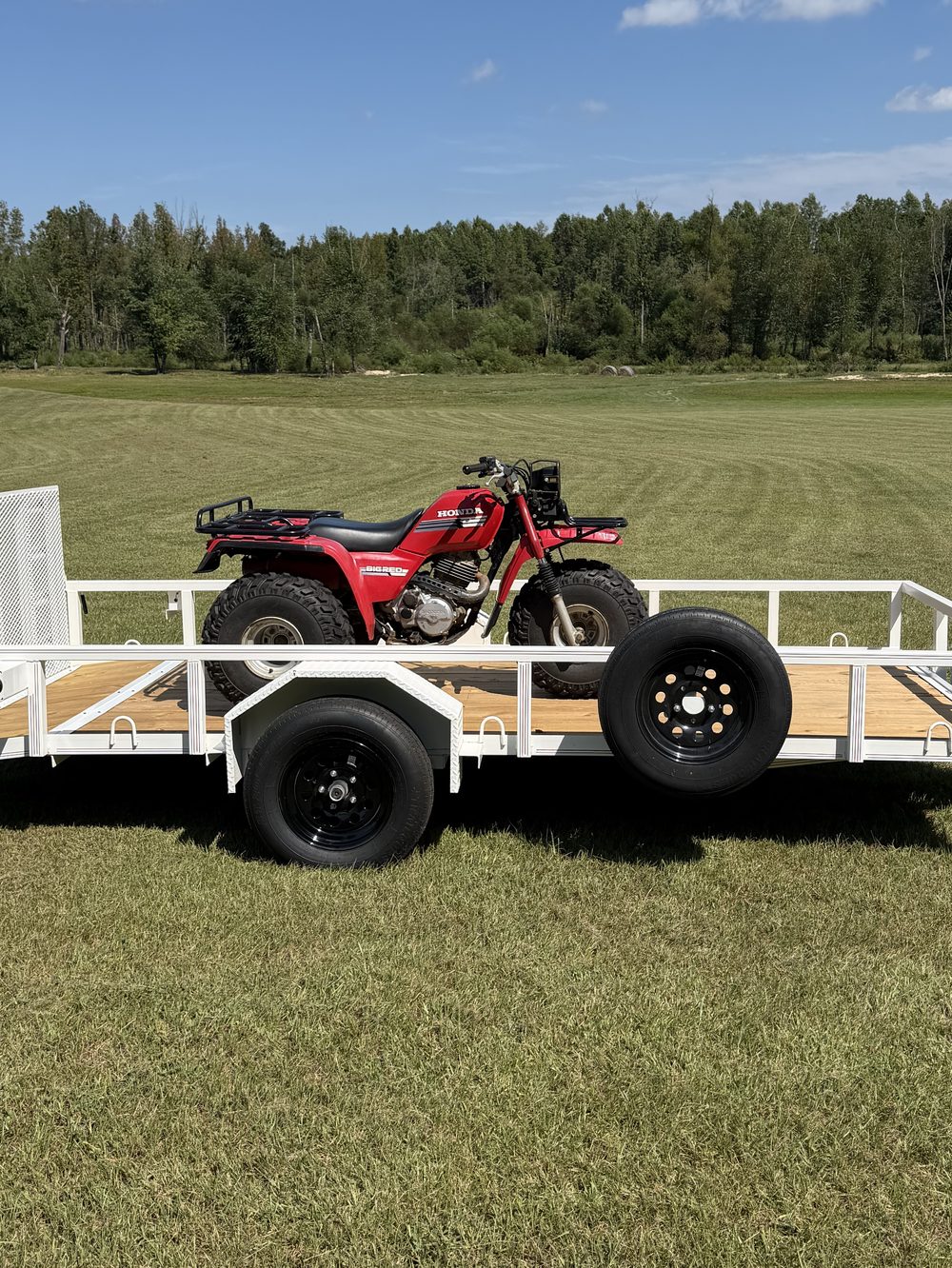
- 5x8: push mowers, ATVs, hauling mulch and appliances. The easy-towing starter size. See our utility trailers.
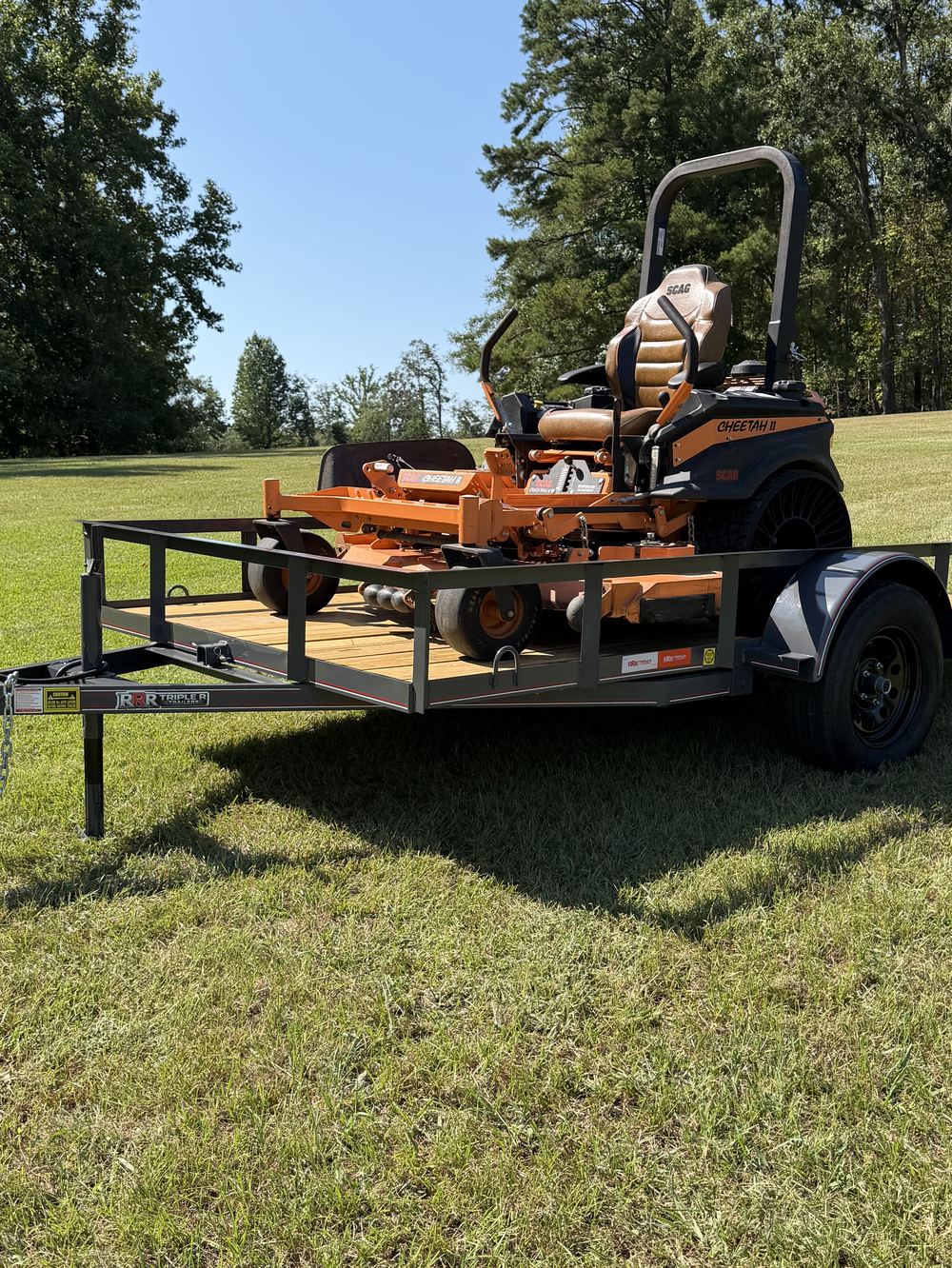
- 6x10 or 6.5x10 with dovetail: zero-turn mowers, golf carts, small tractors. The dovetail makes drive-on loading painless.
- 6x12 enclosed: the contractor favorite. Tools stay dry and locked. See enclosed cargo trailers.
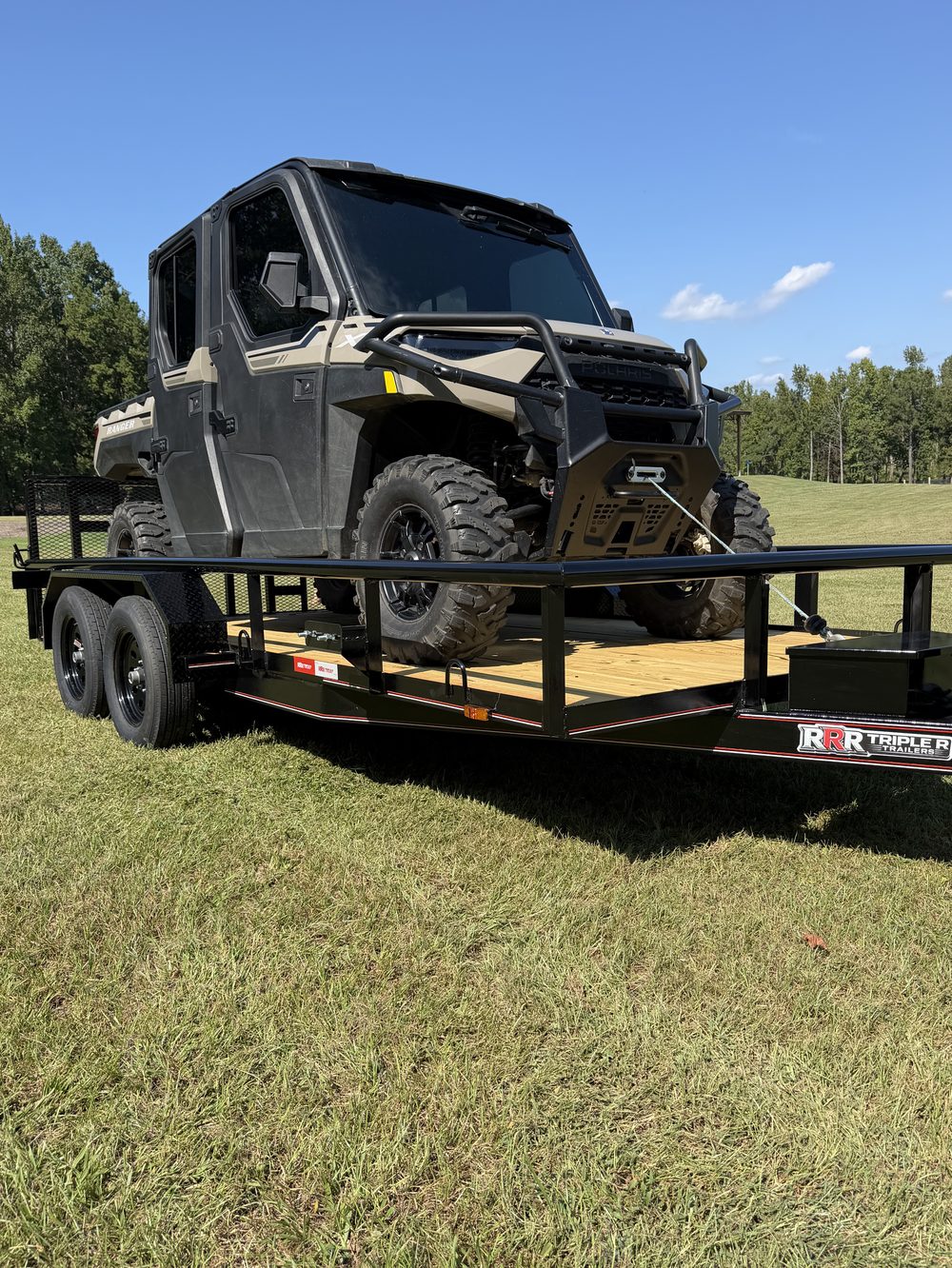
- 7x14 to 7x16: side by sides, two ATVs, serious firewood and feed loads, or a 7x14 dump trailer for dirt and gravel.
- 82x20: cars, trucks, and SUVs on a car hauler deck.
- 8.5x24 enclosed and up: race cars, vending builds, full job site setups.
- 30 ft and beyond: tractors and machinery belong on an equipment trailer or a made to order gooseneck.
Do not forget the weight
Size is only half the answer. A 7x16 loaded with green oak firewood can outweigh a car. Check the axle rating: a single 3,500 lb axle covers light duty, tandem 3,500s handle the middle, and 7,000 lb brake axles carry equipment and dump loads. Every Triple R spec sheet lists axles plainly so you can match the trailer to the true weight, and your tow vehicle's rating always gets the final vote.
Compare space, weight, and access together
Allow room for realistic future loads, but check the exact trailer against your towing setup, storage space, and work-site access. A larger deck does not automatically provide more payload. Ask for the actual empty weight and labeled GVWR of each build before deciding.
Still not sure? Send us what you haul and the factory will size it for you, no charge and no pressure.